
The Role of Technology in Modern Senior Living Communities
This guide walks through everything you need to know about the technologies transforming modern senior living—and what to look for when choosing the community that's right for your family.

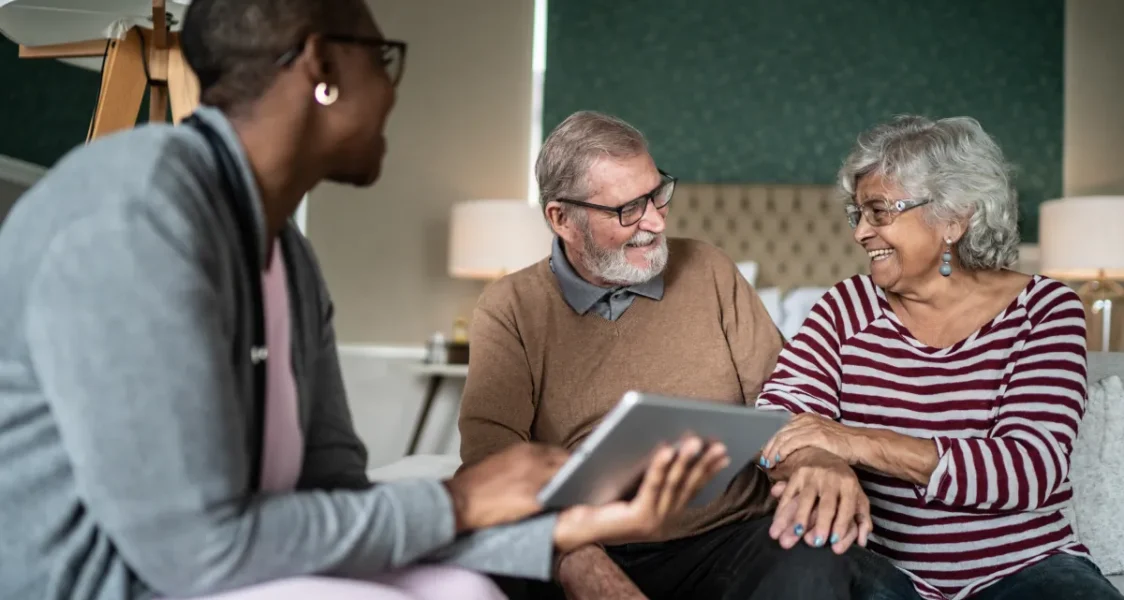
Technology in senior living communities has fundamentally transformed what modern senior care looks, feels, and functions like—and for families navigating one of life’s most important decisions, that transformation matters enormously.
When you begin searching for the right community for someone you love, two questions tend to surface before all others: Will they be safe? And will they truly be cared for? These aren’t small worries. They’re the kind of questions that sit with you through quiet evenings and restless nights, as you scroll through websites, schedule tours, and try to weigh options that feel too important to get wrong.
You deserve answers—real ones. And today’s senior living communities, equipped with smart technology, AI-powered safety systems, and real-time health monitoring tools, are better positioned than ever to provide them.
At Koelsch, where our mission has always been creating happiness by providing the finest living experiences anywhere, we believe technology—when thoughtfully implemented—doesn’t replace the warmth and dignity at the heart of great care. It amplifies it. It creates more room for human connection, more confidence for families, and more freedom for the ladies and gentlemen in our care to live fully and on their own terms.
This guide walks through everything you need to know about the technologies transforming modern senior living—and what to look for when choosing the community that’s right for your family.
How Technology Is Changing Modern Senior Living Communities
Not long ago, senior care was largely reactive. It responded to incidents after they occurred, relied on call buttons and scheduled check-ins, and left family members to fill in the gaps with worry. Today’s technologically advanced communities operate in a fundamentally different way—and the families who understand that difference are better equipped to make confident, informed decisions.
From Basic Care Models to Tech-Enhanced Environments
Modern senior living communities are increasingly built around interconnected systems that monitor health, predict risk, automate routine safety measures, and open direct lines of communication between residents, care teams, and the families who love them. These aren’t experimental features found only in high-end communities. They are becoming the standard that responsible senior care demands—and the standard families rightly expect.
The urgency of this shift is also demographic. According to the U.S. Census Bureau, the population of adults aged 65 and older is expected to nearly double by 2060, growing from approximately 56 million to over 94 million. Communities that invest in smart infrastructure today are not only meeting the needs of current residents—they’re preparing to serve the next generation of older adults with the individualized, dignified care they deserve.
What Families and Residents Can Expect Today
When you tour a leading senior living community, you’ll likely encounter a layered system of technology working quietly in the background: wearable health devices, AI-powered monitoring systems, voice-activated smart assistants, real-time family communication portals, and fall detection systems that respond in seconds. Each tool serves a specific purpose—and together, they create an environment where residents are protected, engaged, and empowered.
Understanding what these tools are, how they work, and what questions to ask when evaluating a community can make all the difference in finding the right fit for your family.
Wearable Devices and Health Monitoring for Older Adults
One of the most significant advances in senior care is the widespread adoption of wearable health technology. These devices do far more than count steps—they create a continuous, real-time picture of a resident’s health that allows care teams to act quickly, precisely, and proactively.
What Wearable Devices Track and Why It Matters
Today’s medical-grade wearables can continuously monitor a range of vital indicators:
- Heart rate and cardiac rhythm—flagging irregularities before they become emergencies
- Blood oxygen saturation—particularly critical for residents with respiratory or cardiovascular conditions
- Sleep quality and duration—identifying patterns that may signal cognitive changes, infection, or emotional distress
- Activity levels and gait—detecting subtle shifts in movement that can indicate fall risk or the early onset of illness
- Skin temperature—an often-overlooked early indicator of fever or infection
The real value isn’t just in the data itself—it’s in the speed at which that data reaches the people who can act on it. When a wearable device detects an abnormal heart rhythm at 2:00 a.m., a caregiver can check on a resident immediately, rather than discovering a problem at the next scheduled visit. That difference in response time can be the difference between a minor concern and a medical emergency.
Research published in the Journal of Medical Internet Research has shown that continuous remote monitoring of older adults significantly reduces hospitalizations and enables earlier clinical intervention—outcomes that directly translate to better health, faster recovery, and greater peace of mind for families.
Remote Health Monitoring and Chronic Condition Management
For residents managing chronic conditions such as diabetes, hypertension, or heart disease, remote health monitoring has been genuinely transformative. Health metrics are securely transmitted to on-site clinical staff and, when appropriate, to a resident’s primary care physician—reducing the need for frequent and sometimes exhausting in-person appointments while enabling far more proactive, personalized care.
Equally meaningful is what this technology offers family members. Many communities now provide secure digital dashboards that allow authorized family members to view a loved one’s recent health data, activity summaries, and care notes. For an adult child living across the country, seeing that their parent slept soundly, participated in morning activities, and showed stable vitals isn’t just informative—it’s genuinely comforting in a way that a weekly phone call simply cannot replicate.
Fall Detection Technology—How It Works and Why It Saves Lives
Of all the ways technology is reshaping senior care, perhaps none carries higher stakes than fall detection and prevention. Falls are the leading cause of injury-related death among adults aged 65 and older, according to the Centers for Disease Control and Prevention (CDC). Each year, approximately 36 million falls are reported among older adults in the United States, resulting in more than 32,000 deaths and millions of emergency room visits. These numbers make fall detection technology not a luxury—but an essential, life-saving component of responsible senior care.
The Risk of Falls in Older Adults: Understanding the Full Impact
The physical consequences of a fall are serious and well-documented: broken hips, head trauma, internal injuries, and lengthy recovery timelines that can permanently alter a person’s independence. But there is a psychological dimension to falls that is too often overlooked—and just as damaging.
Many older adults who experience a fall develop an acute fear of falling again. That fear causes them to limit their movement, reduce their activity, and withdraw from social engagement. Over time, this self-imposed restriction accelerates physical decline, deepens social isolation, and diminishes quality of life in ways that extend far beyond the original injury. In many cases, the fear of falling becomes a greater threat to a person’s well-being than the fall itself.
This is why the families and care teams who understand fall risk—in all its dimensions—are the ones best positioned to address it meaningfully.
How Modern Fall Detection Systems Work
Contemporary fall detection technology doesn’t rely on a single mechanism. The most effective systems layer multiple complementary approaches:
- Wearable fall detection devices—Accelerometers and gyroscopes embedded in pendants, wristbands, or smartwatches detect the sudden motion pattern of a fall and immediately alert staff, often within seconds.
- AI-powered video monitoring—Advanced systems use artificial intelligence to analyze movement in real time, detecting falls with studies demonstrating up to 99% accuracy. Clinical staff can review footage immediately to assess severity and determine the most appropriate response—without delay.
- Motion and pressure sensors—floor sensors, bed exit alarms, and room-based motion detectors — create a perimeter of awareness, notifying caregivers when a resident has left bed at an unusual hour, moved through a high-risk area, or been stationary for an atypical length of time.
- Environmental sensors—Smart bathroom monitors can detect when a resident has been in a high-risk space longer than expected, prompting a quiet, respectful welfare check before any incident occurs.
Communities that have implemented AI-powered fall detection have reported outcomes including 40% reductions in fall rates and up to 80% fewer emergency room visits. Those aren’t just statistics—they represent real people returning to more confident, more independent lives, and families resting easier knowing their loved ones are protected.
Technology That Keeps Families Connected and Informed
Communication Platforms and Family Portals
Entrusting the care of someone you love to any community—however exceptional—involves a significant emotional adjustment. The distance between a family member and their loved one doesn’t have to feel as wide as it once did. Today’s senior living communities offer families a level of access and transparency that would have been unimaginable just a decade ago:
- Secure family portals providing real-time updates on health metrics, daily activities, and care plan notes
- Video calling platforms that allow residents to see and speak with children, grandchildren, and lifelong friends face-to-face—regardless of geography
- Community apps that notify family members of upcoming events, menu changes, programming schedules, and community news
- Direct messaging channels for open, timely communication with nursing staff, activity directors, and community administrators
How Technology Builds Trust Between Families and Care Teams
The most meaningful thing technology offers families isn’t just information—it’s trust. When you can open an app and see that your mother attended her morning exercise class, enjoyed a full breakfast, and had stable blood pressure readings throughout the day, you experience something that no amount of reassurance can fully substitute: direct confirmation that your loved one is genuinely being cared for.
At Koelsch, transparency isn’t a feature—it’s a commitment. We believe in being present in every moment, including those when family members can’t be physically there. Technology extends that commitment and allows us to say with confidence: we’re there in this moment and every moment.
The Benefits of Technology in Assisted Living and Quality of Life
Enhancing Independence and Dignity
The purpose of thoughtfully integrated technology is not to surveil residents or reduce staffing costs. It is to free them. When smart devices handle environmental adjustments, medication reminders, and routine communication tasks that once required assistance, residents can direct their attention, energy, and spirit toward the things that bring them genuine joy—relationships, creativity, movement, laughter, and engagement with life.
This shift from dependence to independence is profoundly dignified. It honors the truth that every resident—every lady and gentleman in our care—is a complete person with preferences, history, personality, and an irreducible right to live on their own terms.
Cognitive Wellness and Mental Engagement
Technology is increasingly important in protecting and enriching cognitive health. Tools now available in quality senior living communities include:
- Brain-training apps and digital puzzles are clinically designed to support memory, processing speed, and executive function
- Virtual classes and online learning communities connecting residents with interests across the country and around the world
- Streaming entertainment, including live concerts, documentary series, and educational programming
- Digital photo frames and reminiscence apps that bring the warmth and familiarity of family memories into everyday living spaces
For residents in memory care settings, technology-assisted music therapy and video reminiscence sessions have demonstrated measurable clinical benefits—including reduced anxiety, improved mood, greater social engagement, and meaningful moments of connection that can reach residents even at advanced stages of cognitive change. Research from the National Institute on Aging supports the role of cognitive engagement and social stimulation in slowing the progression of cognitive decline.
Combating Social Isolation Through Technology
Social isolation is one of the most serious—and most underreported—health risks facing older adults today. Research published by the National Academies of Sciences, Engineering, and Medicine found that social isolation is associated with a 50% increased risk of dementia, a 29% increased risk of heart disease, and a 32% increased risk of stroke. The CDC further identifies loneliness as a significant contributor to depression and accelerated physical decline in older adults.
Technology combats this risk in practical, everyday ways. Group messaging platforms within communities keep residents informed about daily activities and build an ongoing sense of belonging. Video calling closes the geographic gap between residents and the family members and friends they love. And community-facing apps foster the kind of spontaneous social connection—”Did you see there’s live music tonight?”—that enriches daily life in ways both small and lasting.
Final Thoughts—Technology Is Reshaping What Senior Living Can Be
The landscape of senior care has changed in ways that matter deeply to the families navigating it. Fall detection systems that predict risk before it materializes. Wearable devices that monitor heart rate, sleep, and activity without interrupting a single moment of daily life. Smart home technologies that allow residents to control their environment with a word. AI-powered tools that learn each resident’s unique rhythms and quietly alert care teams to changes before they become crises. Family portals that keep loved ones informed, connected, and confident—no matter how many miles lie between them and the people they love.
These are not peripheral conveniences. They are the foundation of a new and better standard in senior care—one that takes safety, dignity, independence, and genuine quality of life seriously, all at once.
And yet, for all the power of technology, the soul of exceptional senior living remains unchanged. It is found in the voice of a caregiver who knows your name and your story. In a dining room filled with familiar faces. In programming that brings laughter, creativity, and purpose to every single day. Technology, at its finest, doesn’t replace those moments—it creates more room for them.
Experience Technology-Enhanced Senior Living at Koelsch Communities
For more than 65 years, Koelsch has been crafting environments where residents don’t simply receive care—they flourish. Our communities bring together the warmth of genuine, dignified hospitality and the capabilities of today’s finest senior living technology. From nurses on-site around the clock to AI-assisted monitoring, from Living Well® programming to Humanitude® care techniques, every element of a Koelsch community is designed around one enduring purpose: creating happiness by providing the finest living experiences anywhere.
If you are exploring options for a parent, a spouse, or yourself—whether that search has just begun or has been underway for some time—we want you to know that you don’t have to navigate it alone. The team at Koelsch is here to answer your questions honestly, listen to your concerns patiently, and help you find the community where your loved one will feel at home.
Your next steps are simpler than they may feel right now:
- Call our team to have a real conversation with someone who understands what you’re going through
- Schedule a personal tour to experience a Koelsch community and see our care philosophy in action
- Explore our communities online to find the location and level of care that best fits your family’s needs