
7 Signs You’re Ready for Independent Senior Living
Most people who are ready for independent senior living don't recognize it as readiness at first. They recognize it as restlessness. As a vague sense that the life they're living and the life they want are no longer exactly the same thing.

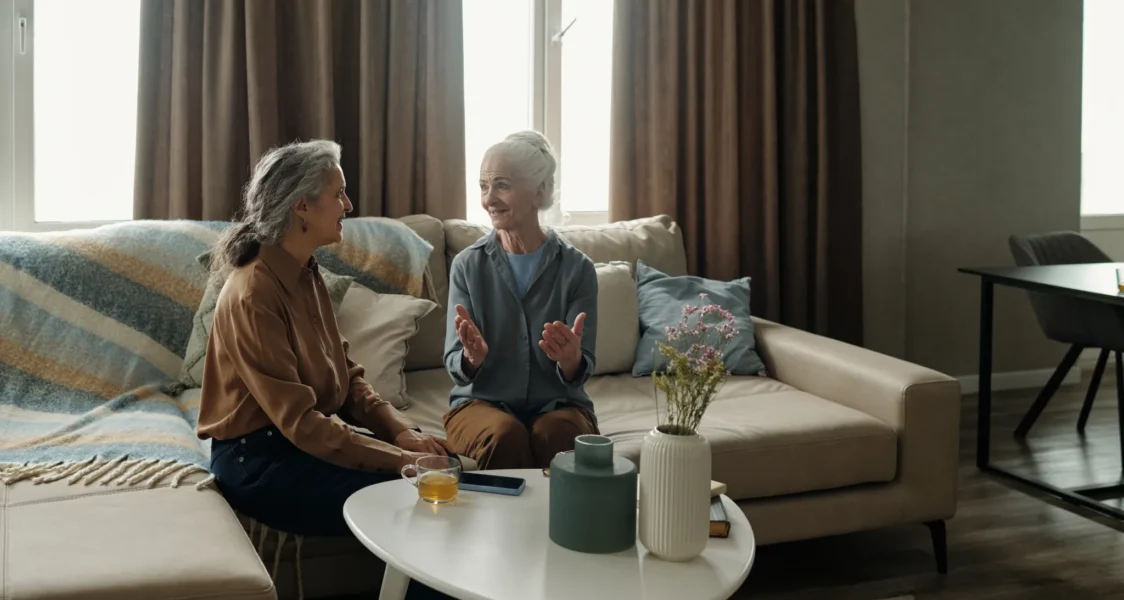
There is a particular kind of readiness that doesn’t announce itself loudly. It arrives quietly, over time—in the accumulated weight of a house that feels too large, in the social calendar that has gradually grown thinner, in the small, recurring thought that life could be fuller than it currently is.
Most people who are ready for independent senior living don’t recognize it as readiness at first. They recognize it as restlessness. As a vague sense that the life they’re living and the life they want are no longer exactly the same thing.
This guide is for the Ladies and Gentlemen who find themselves in that in-between space—not yet certain, but quietly curious. It is not a checklist of problems. It is an invitation to consider what is possible.
For the adult children reading this on behalf of a parent, you’ll find these signs just as useful. The people who navigate this transition most gracefully are almost always the ones who chose the timing thoughtfully, rather than waiting until a health event made the decision for them. If you’re reading this because someone you love seems ready, that instinct is worth following.
Quick Answer: You may be ready for independent senior living when you’re spending more time managing your home than enjoying it, when social connections have grown harder to maintain, when you’re thinking deliberately about the future, or when you sense that the right environment could open rather than close the next chapter. Most residents who make this move wish they had done it sooner.
What Is Independent Living for Seniors?
Independent living is a residential lifestyle designed for older adults—typically 55 and older—who are active, healthy, and self-sufficient but are ready to trade the demands of homeownership for a more enriched, connected way of living.
What Independent Living Looks Like in Practice
In an independent living community, residents live in private apartments or cottages and maintain full autonomy over their daily lives. They choose their own schedule, come and go as they please, and retain every dimension of the independence they’ve always valued. What changes is what they no longer have to manage alone.
Housekeeping, home maintenance, lawn care, and meal preparation are handled. What opens up in their place is time: for travel, for friendships, for the pursuits that make life genuinely good. According to research published in the National Library of Medicine, social connection is among the strongest predictors of well-being in older adults—and communities designed to foster it consistently produce measurably better quality of life outcomes for their residents. For many, independent living isn’t a step down from the life they had. It’s a significant step up.
Independent Living vs. Assisted Living: What’s the Difference?
This is one of the most important distinctions in senior living—and one of the most frequently confused.
| Independent Living | Assisted Living | |
| Who it’s designed for | Active, healthy, self-sufficient seniors | Seniors who need support with daily activities |
| Level of care provided | None required—lifestyle-focused | Personal care: bathing, dressing, medications |
| Daily autonomy | Fully maintained | Maintained with professional support |
| Primary benefit | Community, amenities, freedom from home responsibilities | Safety, care coordination, structured support |
| Typical entry | Mid-60s through mid-80s | Varies—often later or after health changes |
Independent living is not a lesser version of assisted living, nor is it a precursor to it. It is its own distinct lifestyle—one designed for people who are ready to live more, not people who need more help.
What Age Do You Have to Be to Move Into Independent Living?
Most independent living communities welcome residents who are 55 or older, though most residents are in their mid-60s to mid-80s. There is no upper age limit, and there is no single right age to make the move.
The Case for Moving Earlier Than You Think
One of the most consistent observations from residents who have lived in independent living communities for several years is that they wish they had moved sooner. Not because their life before was inadequate, but because they underestimated how much they would gain—and how much time they had spent managing a home when they could have been living more fully.
Moving while you are healthy, active, and fully able to engage with everything a community offers is meaningfully different from moving in response to a health event or a crisis. The former is a choice made from a position of strength. The latter is often a choice made under pressure, with less time to settle in, fewer options to consider, and more emotional complexity around the transition.
7 Signs You’re Ready for Independent Senior Living
These seven signs are not problems to be solved. They are observations—gentle signals that something is shifting, that the life you have and the life you want may be ready to move closer together.
Your Home Demands More Than It Gives Back
A home is supposed to serve the life you want to live. When it starts to feel like the other way around—when weekends are consumed by maintenance, when the to-do list never shortens, when you find yourself thinking more about what the house needs than what you need—that’s worth noticing.
Independent living removes that equation entirely. The maintenance, the housekeeping, the lawn, the repairs—they’re handled by professionals who take genuine pride in the community. What you get back is your time. For many residents, that exchange alone is transformative.
Your Social World Has Quietly Grown Smaller
Social connection doesn’t disappear suddenly. It thins gradually—a neighbor moves away, a friend passes on, the commute that once provided daily interaction disappears with retirement. Before long, the days can feel longer and quieter than they used to be, and building new connection from scratch feels harder than it once did.
In an independent living community, connection is built into the environment. The dining room, the activity calendar, the hallway conversation, the neighbor who knocks—these aren’t scheduled social obligations. They’re the natural texture of daily life in a place designed for it. The CDC has identified social isolation as a serious public health concern in older adults, linking it to increased dementia risk and reduced life expectancy. Communities built around connection make staying socially engaged the path of least resistance.
You’re Thinking About the Future More Deliberately
There is a particular kind of thinking that precedes good decisions—a turning-over of possibilities, a quiet weighing of what one wants the next chapter to look like. When that thinking begins to circle around where you live and how you’re spending your days, it’s worth treating as valuable information.
The Ladies and Gentlemen who make this transition most gracefully are almost always the ones who moved with intention—who chose the community, the timing, and the terms—rather than those for whom the decision was made by circumstance. Thinking about it now, while you have every option available, is not premature. It is wise.
Travel and Spontaneity Feel Complicated by Home Responsibility
A home, when you’re the only one responsible for it, becomes an anchor—not in a comforting sense, but in a tethering one. You can’t leave for the winter without arranging for it. You can’t be fully present on a trip while one part of your mind stays home. You can’t be spontaneous when spontaneity requires a plan for the house.
Independent living frees you from that. You lock your door and go. The community continues to function beautifully in your absence. The travel that once required logistical preparation now requires only a suitcase.
You Want More From Your Days Than Your Current Environment Provides
This is perhaps the most quietly profound of the seven signs—the recognition that the current environment, however comfortable and familiar, is no longer producing the life you want to be living.
A dining room where someone knows your name and your preferences. A fitness center without a commute. A lecture, a concert, a class, a conversation—available not because you drove somewhere and paid for a ticket, but because they’re part of where you live. Independent living communities are designed to make a full, engaged life the default, not the exception.
Safety and Security Have Entered Your Thinking
Not fear—but a reasonable, clear-eyed awareness that living alone in a house carries certain vulnerabilities that weren’t there when others were home, or when you were younger, or when the neighborhood was different from what it is now.
Independent living communities offer 24-hour staffing, secure environments, emergency response systems, and the simple reassurance of knowing that people who know you are nearby. This is not a concession to age. It is a sensible evaluation of what makes a life feel genuinely secure.
You’re Ready for a Community, Not Just a Residence
This is the sign that often surprises people—the realization that what they’re looking for isn’t just a place to live, but a place to belong. A community where people know them, where their interests, history, and humor are known and valued, where the next chapter of their life has the kind of social richness that most people have to work very hard to build on their own.
When the desire for that kind of belonging becomes more than a passing thought—when it starts to feel like something genuinely worth moving toward—that is readiness in its most complete form.
What Happens if My Needs Change After I Move In?
This is one of the most important questions to ask before choosing a community—and one of the clearest indicators of a community’s genuine commitment to its residents. It’s also the question that, when answered well, most often resolves the hesitation that keeps people from moving.
The Continuum of Care
At Koelsch Communities, independent living exists alongside assisted living and stand-alone memory care. This matters enormously when thinking about the future. A resident who moves into independent living at a time of full health and vitality doesn’t have to leave if their needs eventually change. A pathway exists within the organization—one built on existing relationships, familiar faces, and a shared understanding of who they are.
The alternative—moving to independent living, then having to leave entirely if care is needed—is a far more disruptive and emotionally costly experience. Choosing a community that offers a continuum of care is, among other things, a way of protecting your future self from that disruption.
Planning Ahead Is an Act of Self-Respect
Addressing the “what if” question before it becomes an emergency is one of the most thoughtful things a person can do for themselves and for their family. It removes the pressure, the rush, and the reduced options that come with reactive decisions. It gives the people who love you the gift of not having to make those choices under duress.
Moving with intention, into a community with continuity, while you are fully able to participate in that decision—that is not planning for decline. It is planning for a full, well-supported life.
The Benefits of Independent Senior Living
The practical benefits of independent living are well documented. The ones that matter most to residents, however, tend to be the ones nobody fully anticipates until they experience them.
Freedom From Home Maintenance
Housekeeping, landscaping, repairs, utilities, security—handled. The mental load of homeownership, which most people don’t fully register until it’s lifted, diminishes significantly. What remains is the part of life that actually belongs to you.
Genuine Community
Neighbors who share your stage of life. Friendships that form naturally because the environment supports them. A dining room that becomes a gathering place. These things sound modest in description and are profound in experience.
Access to Amenities That Enrich Daily Life
Fitness centers, pools, art studios, libraries, gardens, lecture series, cultural programming—available not as a destination but as part of the place you live. The richness of daily life in a well-designed independent living community consistently surprises new residents.
Peace of Mind—For You and Your Family
Knowing that you live somewhere thoughtfully designed, professionally staffed, and genuinely committed to your well-being extends peace of mind to everyone who loves you. That gift has value that’s difficult to overstate.
When Readiness Meets the Right Moment
The seven signs in this guide are not a verdict. They are an invitation—to look honestly at where you are, to consider what you genuinely want the next chapter to look like, and to trust that the clarity you bring to that question will serve you well.
The Ladies and Gentlemen who find their way to independent senior living at the right time—on their own terms, while every option is still open—consistently describe it as one of the best decisions they have ever made. Not because it was an ending of something, but because it was a beginning.
This Place is for You. And the conversation can start whenever you’re ready.
About Koelsch Communities
Koelsch Communities has been creating happiness by providing the finest living experiences anywhere since 1958. With communities offering independent living, assisted living, and stand-alone memory care, Koelsch is defined by one enduring philosophy: ladies and gentlemen serving ladies and gentlemen. Every resident is treated with the dignity, warmth, and individual attention they deserve—from the first conversation to every moment that follows. We invite you to reach out to our team, schedule a personal tour, or explore our communities. At Koelsch, the conversation starts whenever you’re ready—and we’ll be here.