
Cozy Hobbies to Pick Up as Days Get Shorter
As the afternoons darken earlier and the air turns crisp, cozy hobbies as days get shorter become more than a way to pass the time—they become a way to protect mood, sharpen the mind, and turn a season of less daylight into a season of more warmth. For a loved one who has always stayed busy, the sudden quiet of early sunsets can feel unfamiliar. The good news is that this season also opens the door to some of the most comforting, connective, and mentally engaging activities available to older adults.

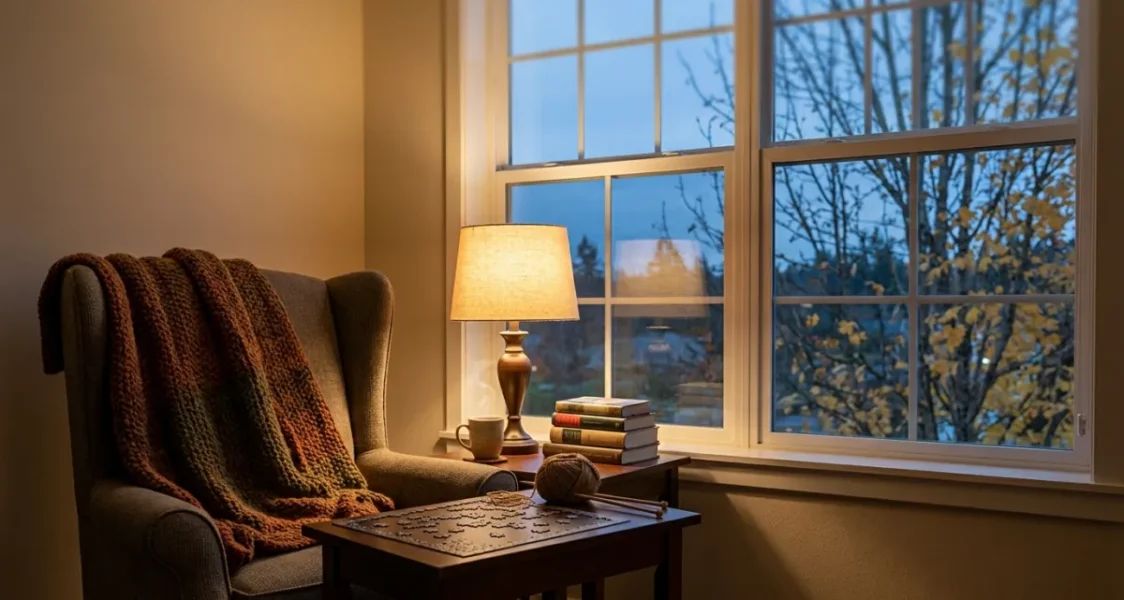
As the afternoons darken earlier and the air turns crisp, cozy hobbies as days get shorter become more than a way to pass the time—they become a way to protect mood, sharpen the mind, and turn a season of less daylight into a season of more warmth. For a loved one who has always stayed busy, the sudden quiet of early sunsets can feel unfamiliar. The good news is that this season also opens the door to some of the most comforting, connective, and mentally engaging activities available to older adults.
Quick Answer: Best Cozy Hobbies for Shorter Days
The best cozy hobbies as days get shorter combine warmth, low physical demand, and mental or social engagement—think knitting, puzzles, journaling, baking, music, and video calls with family. These activities counter the mood dip that shorter daylight hours can bring, support cognitive health, and work well regardless of mobility, making them ideal for evenings spent close to home.
Why Shorter Days Change How We Feel
There’s a reason a loved one might seem more tired, less motivated, or quieter once daylight saving time ends and the sun sets before dinner. This isn’t imagination or simply “getting older”—it’s biology.
What’s Actually Happening in the Body
Reduced sunlight exposure disrupts the body’s internal clock. According to the National Institute of Mental Health, less daylight can lower serotonin levels, the brain chemical that helps regulate mood, while also disrupting melatonin and the sleep-wake cycle. That combination can leave someone feeling sluggish, unmotivated, or simply “off,” even when nothing else in their life has changed.
When It’s More Than Just Tiredness
For some, the seasonal shift goes beyond ordinary tiredness. Seasonal affective disorder, or SAD, is a real and recognized condition tied to shorter daylight hours, and it occurs more often in people living farther from the equator, where winter daylight is especially limited. Common signs include oversleeping, low energy, carbohydrate cravings, and withdrawing from activities that once brought joy. The National Institutes of Health notes that engaging in hobbies, spending time outdoors when possible, and staying connected to family and friends are among the simplest and most effective ways to help lift mood during these months. Symptoms that last two weeks or longer are worth discussing with a doctor, but for many, a rhythm of engaging, low-pressure activity makes a meaningful difference.
The Comfort of a Cozy Hobby: Why This Season Calls for One
There is something quietly restorative about pulling a favorite hobby back out as the days shorten—a familiar craft, a stack of books, a recipe passed down through the family. At Koelsch, where our mission has always been creating happiness by providing the finest living experiences anywhere, we believe this season isn’t something to simply get through. It’s an invitation to slow down, turn inward a little, and rediscover the pursuits that make an evening feel full rather than long, a value we’ve carried since 1958.
Cozy Hobbies as Days Get Shorter: Where to Begin
The right hobby depends on the person—their interests, their energy, and what feels comforting rather than like an obligation. These categories offer a starting point for almost anyone, and our resources hub gathers even more seasonal ideas.
Hobbies for the Hands
Tactile, creative work is grounding, and it’s easy to pick up and set down as energy allows.
- Knitting, crocheting, or needlepoint
- Watercolor painting or adult coloring books
- Puzzle assembly, from 500-piece scenes to family photo puzzles
- Simple woodworking or model building
- Scrapbooking old photographs
Hobbies for the Mind
Mentally engaging activities support the kind of cognitive health families often worry about most. Research from the National Institute on Aging has found that older adults who take up new, mentally demanding pursuits—such as quilting or learning digital photography—show more memory benefit than those who stick to passive activities alone.
- Crossword puzzles, Sudoku, and word games
- Journaling or writing a family history
- Learning a language through an app or class
- Genealogy research
- Card games and strategy board games
Hobbies for Connection
Isolation tends to creep in when daylight hours shrink and outings feel like more effort. The National Institute on Aging points to social engagement, including regular calls with loved ones and light volunteer work, as one of the strongest supports for both mood and cognitive health in later life.
- Weekly video calls with grandchildren or old friends
- Joining a book club, even a virtual one—a good option for anyone managing feelings of isolation
- Letter writing or sending cards
- Volunteering for a cause with flexible, low-commitment hours
- Group activities within a senior living community
Hobbies for Rest and Reflection
Not every hobby needs to be productive. Some of the coziest pursuits are simply restorative.
- Reading by lamplight or listening to audiobooks
- Slow, seasonal cooking and baking
- Listening to music or attending a small live performance
- Tea or coffee rituals paired with quiet reflection
- Gentle stretching or chair yoga to a favorite playlist
Find Your Cozy Hobby
| If you’re looking for… | Try this | Good for limited mobility | Can do it alone at home |
|---|---|---|---|
| Something calming | Reading, music, tea rituals | Yes | Yes |
| Cognitive engagement | Puzzles, journaling, language learning | Yes | Yes |
| Social connection | Video calls, book clubs, volunteering | Yes | Sometimes |
| Hands-on creativity | Knitting, painting, woodworking | Yes | Yes |
| Gentle movement | Chair yoga, stretching, dancing at home | Depends on ability | Yes |
Hobbies for Every Ability and Living Situation
A hobby should adapt to the person, not the other way around. For a loved one with limited mobility, seated crafts, tabletop games, reading, music, and video calls all offer meaningful engagement without physical strain. For someone who spends much of their time at home alone, structured routines matter more than the activity itself—a daily puzzle over morning coffee, a standing video call with a grandchild, or a weekly letter-writing habit can turn solitary hours into something anticipated rather than endured. The goal isn’t to fill every minute. It’s to build in a few small, reliable moments of engagement each day.
Bringing More Light Into the Season
Alongside a good hobby, small daily habits can help counter the effects of shorter days: sitting near a bright window during morning coffee, taking a short walk when the sun is out, and keeping a consistent sleep schedule. The CDC notes that older adults benefit from moving in whatever way feels manageable, and pairing that movement with daylight makes it count twice. For some, a light therapy box—recommended by the National Institute of Mental Health for seasonal mood changes—offers additional support. These small adjustments work well alongside, not instead of, the comfort of a favorite hobby.
How Koelsch Communities Supports This Season Well
Ladies and gentlemen serving ladies and gentlemen means noticing when the season shifts and responding with warmth rather than waiting for a loved one to ask for it. Across Koelsch communities, enrichment programming like Living Well® and Historical Surprises® is designed to bring the kind of purposeful, cozy engagement this article describes into daily life—crafting circles, music hours, storytelling, and quiet spaces for reading are as much a part of the season as any tradition. Whether a loved one lives independently, receives daily support through assisted living, or is exploring what community life could look like, the goal is the same: helping the ladies and gentlemen in our care find comfort, purpose, and connection in every season, not just the bright ones.
A Season for Warmth, Not Withdrawal
Shorter days don’t have to mean a smaller life. With the right hobby, a little structure, and the people who matter close by, this season can feel less like something to endure and more like an invitation to slow down together. We invite you to reach out to our team, schedule a personal tour, or explore our communities online. At Koelsch, this place is for you—and we are honored to be there in this moment, and every moment that follows.