
Healthy Comfort Food: Fall Recipes for Seniors
Few things say autumn quite like the smell of something warm simmering on the stove, and the best fall recipes for seniors bring that same comfort to the table without working against a loved one's health. Pumpkin, squash, root vegetables, and warm spices aren't just seasonal—they're some of the most nutrient-dense, budget-friendly, and easy-to-prepare ingredients available, and with a few adjustments for sodium, portion, and texture, they can be just as good for a loved one's health as they are for the soul.

Few things say autumn quite like the smell of something warm simmering on the stove, and the best fall recipes for seniors bring that same comfort to the table without working against a loved one’s health. Pumpkin, squash, root vegetables, and warm spices aren’t just seasonal—they’re some of the most nutrient-dense, budget-friendly, and easy-to-prepare ingredients available, and with a few adjustments for sodium, portion, and texture, they can be just as good for a loved one’s health as they are for the soul.
Quick Answer: Healthy Fall Recipes for Seniors
The best fall recipes for seniors favor naturally low-sodium, high-fiber ingredients like pumpkin, squash, root vegetables, apples, and beans, prepared with herbs and spices instead of added salt. Soups, stews, and roasted or mashed vegetables offer nutrient-dense comfort that’s easy to chew, gentle on sodium intake, and simple to adapt for individual calorie and dietary needs.
What Foods Should Seniors Eat Every Day?
A good day on the plate for an older adult centers on a few consistent building blocks rather than any single “superfood.” MedlinePlus, a consumer health resource from the National Institutes of Health, recommends daily servings of fruits and vegetables in a range of colors, whole grains like oatmeal and brown rice, lean proteins such as fish, poultry, eggs, beans, and nuts, and low-fat or fat-free dairy or fortified alternatives. Fall produce fits naturally into this pattern—a single cup of roasted squash or a bowl of vegetable soup checks the produce box while delivering fiber and potassium a loved one needs.
How Many Calories Does a Senior Need?
Calorie needs vary by sex, body size, and how active someone is, so there’s no single number that fits everyone. As a general reference, the Merck Manual estimates that women over 60 need roughly 1,600 calories a day if sedentary and up to 2,000 if active, while men over 60 typically need around 2,000 calories if sedentary and 2,400 to 2,600 if active.
| Sex | Sedentary | Active |
|---|---|---|
| Women, 61+ | ~1,600 calories | ~2,000 calories |
| Men, 61+ | ~2,000 calories | ~2,400–2,600 calories |
These figures are a starting point, not a target to hit exactly—a doctor or dietitian can offer more precise guidance based on a loved one’s health history and goals, and our resources hub gathers more general nutrition guidance for this stage of life.
Low-Sodium Eating Without Losing Flavor
Sodium is one of the most common concerns families raise about a loved one’s diet, and for good reason. The American Heart Association recommends an ideal limit of no more than 1,500 milligrams of sodium a day for most adults, with 2,300 milligrams as a ceiling not to exceed—yet the average American eats more than 3,100 milligrams daily. Fall cooking makes it easy to close that gap. Warm spices like cinnamon, nutmeg, and ginger, along with fresh herbs, garlic, and a splash of citrus, build deep flavor without relying on salt, and swapping in low-sodium broth is one of the simplest changes in any fall soup or stew.
Foods Seniors Should Limit or Avoid
Rather than a strict list of forbidden foods, most guidance points to a handful of categories worth limiting. The newly updated 2025–2030 Dietary Guidelines for Americans specifically call out highly processed foods, sugar-sweetened beverages, and packaged snacks as items to cut back on, while continuing to recommend keeping saturated fat under 10 percent of daily calories. MedlinePlus adds “empty calorie” foods like chips, candy, baked goods, and fried foods to that list, alongside stick margarine and vegetable shortening. None of this rules out comfort food this season—it simply points toward baking, roasting, and slow-cooking instead of frying, and reaching for warm spices instead of extra salt or sugar. For more on building a balanced plate, our resources hub covers senior wellness topics year-round.
Healthy Fall Recipes for Seniors
These four dishes were developed with sodium, portion size, and texture in mind, and each can be adjusted for individual calorie needs or chewing ability.
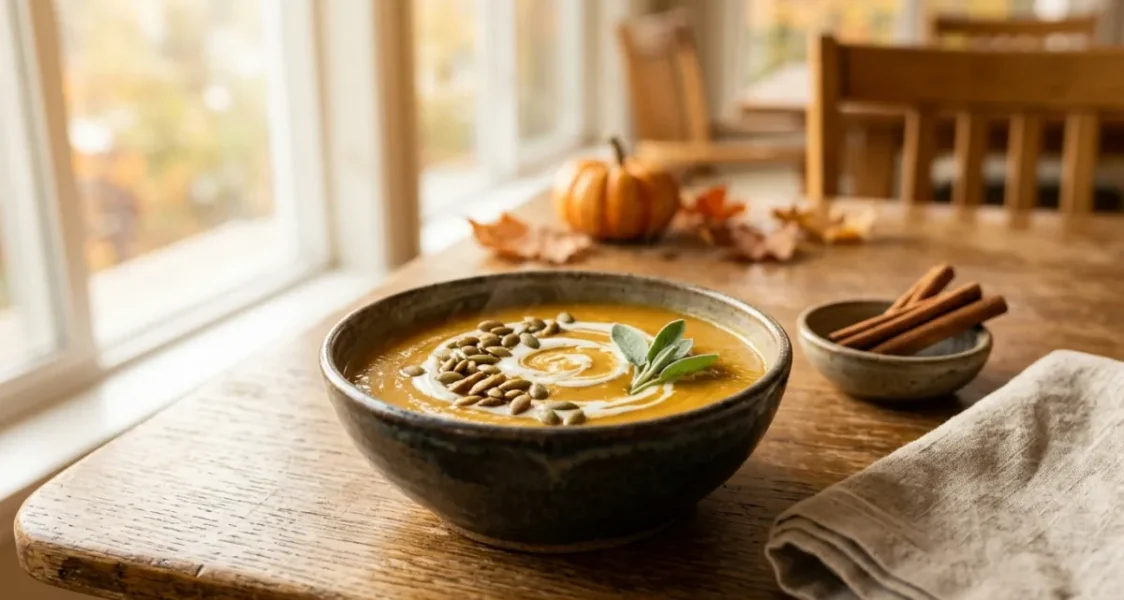
Cozy Low-Sodium Pumpkin Soup
Blend roasted pumpkin or canned pure pumpkin with low-sodium vegetable broth, a splash of milk or cream, and warm spices like cinnamon and nutmeg. Simmer until heated through, then puree until smooth—naturally soft, naturally sweet, and easy on sodium.
Baked Cinnamon Apples
Core and slice apples, toss with cinnamon and a small amount of butter or oil, and bake until fork-tender. Serve warm on their own or alongside oatmeal for a naturally sweet dish that needs no added sugar.
Slow-Roasted Root Vegetables
Toss carrots, parsnips, and sweet potatoes with olive oil and herbs, then roast until caramelized and tender. Mash any portion that needs a softer texture—the flavor holds up beautifully either way.
Hearty White Bean and Vegetable Stew
Simmer white beans, diced squash, celery, and carrots in low-sodium vegetable or chicken broth with rosemary and thyme. This dish delivers fiber and plant-based protein in a warm, spoonable form.
Why Pumpkin Belongs on the Fall Table
Pumpkin earns its seasonal spotlight for more than flavor. According to Mayo Clinic Health System, one cup of pumpkin provides about 245 percent of a person’s daily vitamin A needs, along with 564 milligrams of potassium and three grams of fiber—all for roughly 50 calories. That combination supports eyesight, immune function, and healthy blood pressure, and pumpkin’s naturally soft texture once cooked makes it especially easy to work into meals for a loved one who has trouble chewing.
Best Soups for Seniors with Dental Issues
Soup is one of the most forgiving dishes for anyone managing chewing or swallowing difficulty, since texture can be adjusted without sacrificing nutrition. Oklahoma State University Extension’s nutrition guidance for older adults recommends milk-based soups and broths with well-cooked, finely cut ingredients, along with mashing vegetables like squash and potatoes directly into the broth to add body and nutrients without added chewing effort. Pureed soups—like the pumpkin soup above, or a blended butternut squash or carrot soup—tend to work especially well, since blending removes the chewing step entirely while preserving fiber and vitamins.
Find the Right Fall Recipe
| If you need… | Try this | Low sodium | Dental-friendly |
|---|---|---|---|
| A soft, soothing meal | Pumpkin soup | Yes | Yes |
| Something naturally sweet | Baked cinnamon apples | Yes | Yes, when soft-baked |
| A fiber-rich side | Roasted or mashed root vegetables | Yes | Yes, when mashed |
| A protein-forward main | White bean and vegetable stew | Yes | Mostly, with well-cooked beans |
How Koelsch Communities Approach Mealtime
Ladies and gentlemen serving ladies and gentlemen extends into the dining room, where a meal is never just a meal—it’s a daily source of comfort, nourishment, and connection. Across Koelsch communities, multiple dining locations based on acuity level mean that a loved one’s plate is shaped around what they actually need, whether that means a heartier portion, a texture-modified dish, or simply their favorite fall soup made the way they like it. Whether a loved one lives independently, receives daily support through assisted living, or requires the focused attention of memory care, the goal at every table is the same: real nourishment, prepared with genuine care.
A Season Best Served Warm
Fall’s ingredients make healthy eating feel less like a rule to follow and more like a table to look forward to. With a few thoughtful swaps for sodium, texture, and portion, the same pumpkin soup or baked apples that taste like the season can also support a loved one’s health, one comforting bowl at a time. We invite you to reach out to our team, schedule a personal tour, or explore our communities online. At Koelsch, this place is for you—and we are honored to be there in this moment, and every moment that follows.